
Provo Police Blotter Records
Provo Police Blotter records give you a direct route into incident reports, arrest reports, and the county and court records that follow a local call for service. Provo is the Utah County seat and home to Brigham Young University, so the city sees a steady mix of student, neighborhood, and traffic-related police work. That makes the records trail worth following with care. Start with the city request page when you need a Provo report. Move to Utah County jail and court sources when the booking or charge has already left the city desk and entered the county system.
Provo Quick Facts
Provo Police Blotter Requests
Provo keeps its police records through the Provo Police Department, and the city offers an online form for records requests under GRAMA. That makes the city page the right first stop when you need a police report, an arrest report, or an accident report tied to a Provo call. The department lists its office at 445 W. Center St. Suite 130, Provo, Utah 84601, and it gives non-emergency dispatch as (801) 852-6210. If a call has already been logged, those details help you match the report to the right office fast.
See the city request page at Provo Police Department request records. That page is the cleanest path for a Provo Police Blotter search because it sits inside the city's own request system. The police department main site at Provo Police Department adds the department's mission and service goals, including a focus on community, partnerships, accountability, professionalism, and respect. Those values matter because they show how the city frames both service and records access.
The city also runs a broader GRAMA portal at Provo GRAMA Request. That portal is useful when the record you need is not purely a police file. It also helps when you need to route a request through the city before the police records division can open the file. Provo says the request system is there for specific records, so a tight and clear ask works better than a broad one.
This image from Provo Police Department request records shows the city's main records entry point for Provo Police Blotter material.
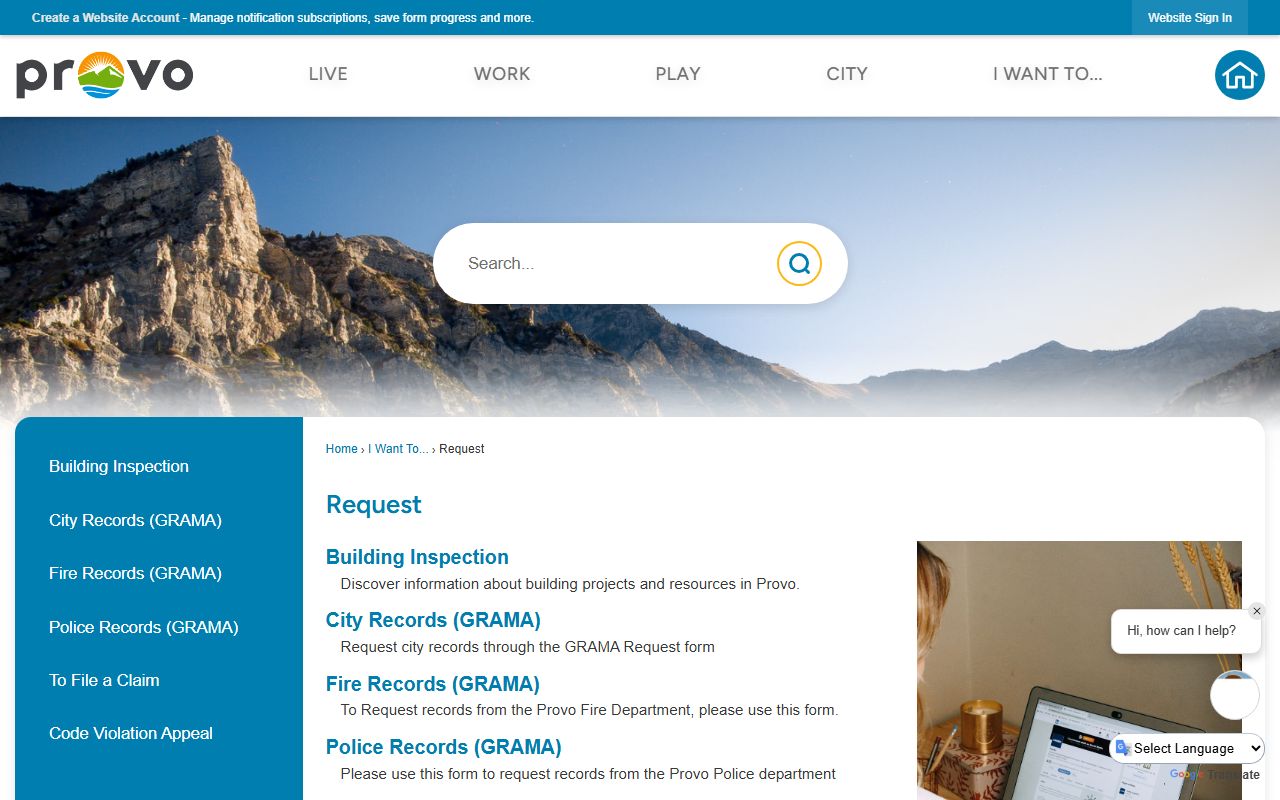
The page is the right front door for a Provo request. Use it when you need a city report rather than a county jail entry.
Provo Police Blotter Records
Once a Provo incident has been reported, the records can branch in more than one direction. The city file may contain an incident report, an arrest report, or an accident report. Those are the records the department says it makes available. If you only need to confirm that an event was logged, a city request can be enough. If you need the legal result, you usually need to look farther out to Utah County court records. That split keeps the blotter useful as a lead, but not as the whole story.
Provo says its police service is meant to improve quality of life, solve problems, safeguard liberties, and stop crime. That is a service statement, but it also tells you what kind of record may exist after a call. A traffic stop, a noise complaint, a theft report, or a campus-related incident can all leave behind different papers. The city page and the request page together help you match the record type to the event.
The city department also says transparency and accountability are priorities. That matters under GRAMA because a Provo Police Blotter search is not just about finding a name. It is about getting the right record from the right office. If the file is broad enough to include notes, photos, or other material, the city may still narrow the release to the parts the law allows. Under Utah public records rules, the record can be open even when some pieces stay out of view.
In practice, a good Provo request should name the report type and the date. If you have a case number, add it. If you only know a person and a rough date, that can still work. The department can use that information to locate the file and tell you whether the records are ready for release.
Utah County Jail Records
When a Provo arrest moves into county custody, the Utah County Sheriff's Office becomes the next place to check. The county's Arrested Person Search is a strong lead because it shows booking information, but it only appears 24 hours after the booking takes place. That gap matters. A name may not show at first, then appear the next day with a fuller booking record. The search can be done by name or arrest date, so you can keep the search narrow.
Utah County's inmate search at Utah County Sheriff's Office inmate search can show a lot more than a name. The roster includes the arrest date and time, arresting agency, booking date and time, booking number, status, and sometimes the court and case number tied to a charge. Booking photos show for 30 days. That makes the county jail page a good second step when a Provo Police Blotter entry has already moved out of the city file.
For a wider county view, the Utah County Sheriff's Office is the official place to continue when a Provo search turns into a warrant or other county-enforcement question.
To pull the right county record, ask for the name, date of birth if known, and the approximate booking date. If you already have a booking number, use it. That small detail often cuts the search time in half and keeps you from chasing the wrong person in a busy county roster.
Provo Police Blotter and GRAMA
GRAMA controls how Provo and Utah County decide what to release. The law starts with a presumption of access, but it also gives agencies room to protect privacy and investigation integrity. Under Utah Code Title 63G Chapter 2, agencies can classify material as public, private, protected, or controlled. That means a Provo Police Blotter record may be public while witness names, sensitive details, or active-investigation notes stay withheld.
Response timing matters too. Utah law gives agencies ten business days to answer a written request, and five business days for expedited requests when the request qualifies. The city and county can still ask for more time when the file is large or needs review. That is normal. It does not mean the request is lost. It means the office is checking what it can release and what must stay back for now.
If the record is a statewide criminal history matter rather than a local report, the next stop is the Utah Bureau of Criminal Identification at Utah BCI criminal records. BCI handles the official history repository and explains the rules for getting a copy of your own record. That path is different from a city report request, but it matters when the Provo blotter question turns into a broader criminal history question.
Note: A Provo request can reach the right office quickly, but the record can still be partly redacted if GRAMA or case status requires it.
Provo Court Records
Once the arrest becomes a filed case, the court record takes over. The Utah court system keeps the next layer of the story, including filings, hearing dates, plea information, and the outcome of the case. If you are tracing a Provo Police Blotter event from start to finish, you should expect to move from the city request page to the Utah County jail search and then to the Utah courts record system.
The state courts records page at Utah courts records is the best statewide starting point for that work. It is also the right place to look when you need a court case number that is not on the booking page. Older case work may point to the Utah State Archives as well, especially if the file has been moved out of the active court system. That helps when the Provo incident is not recent and the current jail tools do not show anything useful anymore.
Searches go faster when the city, county, and court pieces line up. A city report tells you what happened. The county jail page tells you where the person was booked. The court file tells you what the system did with the charge. That three-step path is the cleanest way to keep a Provo Police Blotter search from getting stuck halfway through.
Request Details
If you are asking Provo for a report, keep the request narrow and plain. The city and county offices both work better when they can match the file fast. That is true for city reports and for county booking data. A precise request also helps if the city has to review the record for redactions before release.
Include the basic facts below when you can:
- Full name of the person involved
- Approximate date of the incident or arrest
- Report, booking, or case number if known
- Your contact information for the response
Provo's GRAMA portal says requesters should give specific information about the records they seek. That is good practice here. The clearer the ask, the faster the city can tell you whether the file is public, partly redacted, or still under review.
Utah County and City Links
Provo sits at the center of Utah County, so most searches eventually point back to the county court or the county jail. Use the county page when the record left the city desk and moved into a broader custody or court file. Use the nearby city pages when the incident began somewhere else in the county or the request needs a local police department instead of Provo.
Nearby Utah Cities
Nearby city pages can help when a Provo incident crossed a municipal line or when the arresting officer was from another department in Utah County. Use the city page that matches the agency first, then compare it with the county file.