
Orem Police Blotter Records
Orem Police Blotter records are the city-level path for arrests, incident files, and the review rules that apply when a request reaches the police records desk. Orem sits next to Provo in Utah County, so a search can quickly move from a city report to a county jail entry or a court file. That is normal. The city file shows what officers logged. The county record shows custody and booking. The court record shows what happened next. A good search follows that trail in order instead of guessing which office has the answer.
Orem Quick Facts
Orem Police Blotter Requests
Orem Police says it serves the city through community policing and crime prevention, and it processes records requests according to GRAMA. That means the city is the first stop for an Orem report. The department also says records of arrests and incidents within city limits are part of its work. If you need the city file, start with the Orem Police Department page at Orem Police Department. That page is the local source for department service and contact information.
The city policy manual gives even more detail. In the GRAMA section, Orem says requests for recordings and other records will be accepted and processed in line with federal, state, and local law. It also says the release of recordings should protect victims, witnesses, and suspects whenever possible and should not compromise an investigation. That is the right framework for an Orem Police Blotter search, because it tells you the city is trying to balance access with privacy and case integrity.
This image from Orem Police Department shows the city police page used to begin an Orem Police Blotter search.
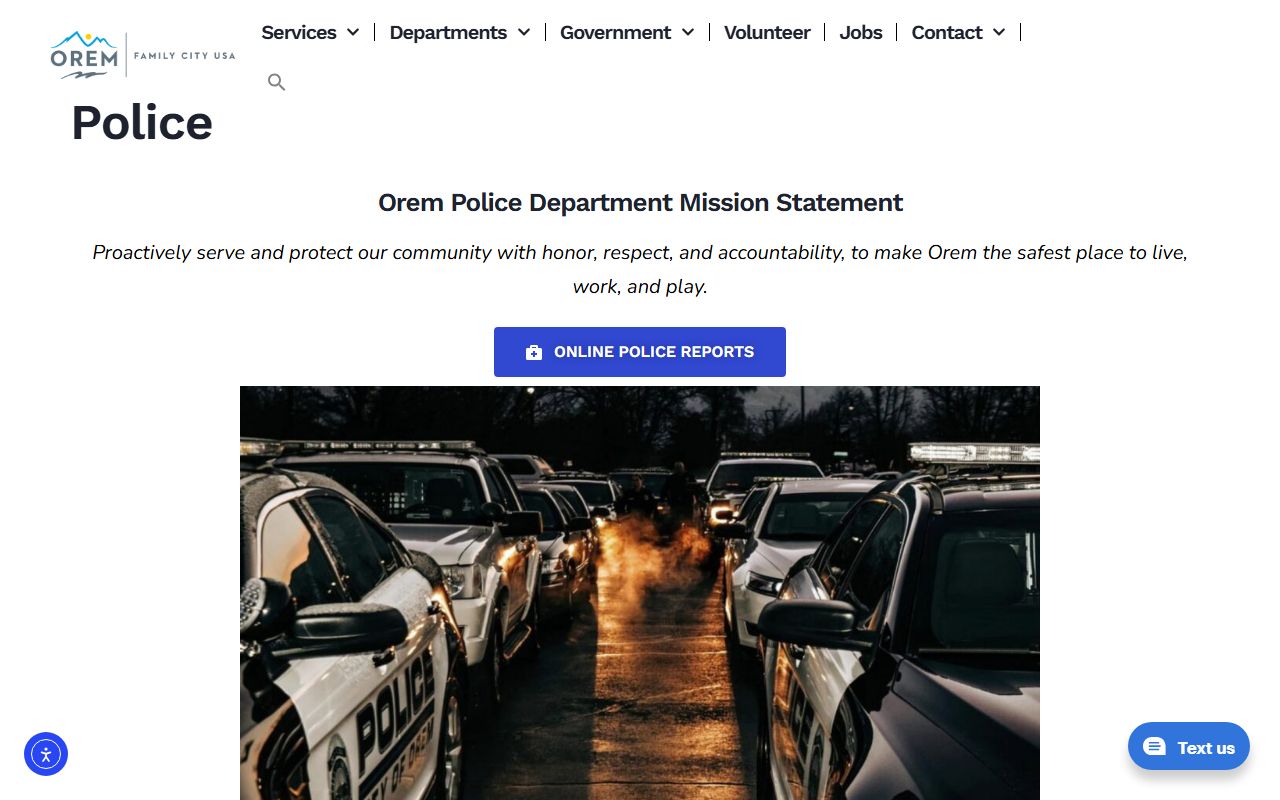
The page is a useful first step when you need to confirm where the city sends records requests and how the department organizes its public work.
The policy manual also says that body-worn camera recordings may be classified as private, protected, or controlled on a case-by-case basis. That matters because an Orem request may be granted in part and withheld in part. If you are asking for a recording, the city may release some material and redact the rest. That is not unusual. It is how the law protects privacy while still giving access where the record is public.
Orem Police Blotter Records
The most useful Orem records are usually the ones tied to a specific call. Those can include arrest records, incident reports, and related records that the department keeps for city incidents. Orem says records requests follow GRAMA, and the policy manual says the department will accept requests for recordings and other records. That makes the city records desk the right place for the first ask when you know the incident happened in Orem.
Orem's records page may not give every detail up front, but it tells you the city takes transparency seriously and expects its requests to be specific. The better the request, the easier it is for staff to locate the file. If the matter is already in the county jail system, the city record may still matter because it can show the first police contact. That is especially true for calls involving traffic, disorderly conduct, theft, or a local disturbance.
For a city request, include the basic facts that match the event. If you know the date, add it. If you know the report number, use it. If you only know the person and a rough time, that can still help. The city can then decide whether the record is public, partly protected, or still under review. Under GRAMA, that is often the difference between a quick release and a longer wait.
Utah County Jail Records
When an Orem arrest moves into custody, the Utah County Sheriff's Office becomes the next place to look. The county's Arrested Person Search is the best way to check a live booking, but the system only shows booking information 24 hours after the arrest. That time gap keeps people from expecting an instant match. It also means a missing name can show up later once the county has processed the intake.
Utah County's inmate search at Utah County Sheriff's Office inmate search gives you more than a name. It can show arrest time, arresting agency, booking number, current status, bond information, and the charges linked to each case. The jail is located at 3075 North Main, Spanish Fork, Utah 84660. Booking photos are shown for 30 days, which helps when you are confirming the right person or the right booking date.
If the Orem matter turns into a warrant or broader county-enforcement question, the Utah County Sheriff's Office is the better official backup when the city file does not answer the question.
Utah County also gives a clear county-level search path through its sheriff and inmate-search tools. Those official sources match the county search flow well and remind you that arrest records are not conviction records and that some information can still be private or protected under GRAMA and criminal history law.
Orem Police Blotter and GRAMA
GRAMA shapes nearly every Orem request. Under Utah Code Title 63G Chapter 2, public records are presumed open, but records can be classified as private, protected, or controlled when the law says they should be. Orem's policy manual follows that same idea. The department says it can make legitimate redactions or denials when privacy or investigation integrity would be hurt by a full release.
The statute also sets the timing. Utah agencies normally have ten business days to answer a written request, and an expedited request can move in five business days if the requester shows why the public interest justifies it. Orem's policy manual says appeals procedures are available when a request is denied. That gives the requester a path forward if the city withholds too much or if the record classification looks off.
For statewide criminal history, the Utah Bureau of Criminal Identification is still the stronger source. The BCI records page at Utah BCI criminal records explains how Utah handles official criminal history files. That matters when an Orem blotter search turns into a statewide question about a person's history rather than a city report about one incident.
Note: Orem can release part of a record and still withhold sensitive sections, so the first copy you receive may not be the last word.
Orem Court Records
Once a case moves from the arrest stage into court, the Utah courts record system becomes part of the search. Court files show filings, hearings, and the result of the case. That is where you look if the Orem Police Blotter entry has already turned into a charge and the jail page only gives the booking side. Court records are also the place to check if a case was dismissed, resolved by plea, or set for later hearing.
The Utah court records page at Utah courts records is the statewide starting point for that work. It is the best next step once you know the city and the county but need the legal side of the file. If the matter is older, Utah State Archives material may also help, especially when a record has moved out of the active system. That is less common for a fresh Orem call, but it matters for older research.
Think of the city report, county booking, and court file as three layers of the same event. The Orem Police Blotter gives you the first layer. The Utah County jail page gives you custody. The court file gives you the legal finish. When those pieces line up, the search gets much easier to trust.
Request Details
Orem's request system works best when the ask is narrow. The city says it wants openness, but it also says records should not be released in a way that harms privacy or the investigation. That means the request should point staff to the exact file if possible.
Use the basics below when you file a request:
- Full name of the person involved
- Date or approximate date of the incident
- Report number, if you have it
- Contact details for the reply
The clearer the request, the faster the city can decide whether it is public, redacted, or still held for investigation reasons. That is the simplest way to keep an Orem Police Blotter search moving.
Utah County and City Links
Orem sits in the middle of Utah County's city network, so a record can easily move from one local office to another. Use the county page when the booking or warrant is county level, and use nearby city pages when the incident started inside a city boundary.
Nearby Utah Cities
Use nearby city pages when the arresting officer was from another department or when the record request belongs with a different municipal office. That often happens in Utah County, where the city, the county jail, and the courts can all touch the same matter.