
Search Eagle Mountain Police Blotter
Eagle Mountain Police Blotter records begin with two city paths that work together. The Eagle Mountain City Recorder handles public information requests, while the Utah County Sheriff's Office provides the contract-city patrol service that writes the field report. That matters because a call in Eagle Mountain can start as a city incident and later show up in county booking or court records. If you know the date, street, or report type, you can aim the request at the right office faster. The city keeps the record trail organized. The county handles the patrol side.
Eagle Mountain Police Blotter Basics
The Eagle Mountain City Recorder says the office manages official city records, prepares agendas and minutes, supports elections, and keeps public access moving under GRAMA. That makes the recorder a real starting point for Eagle Mountain Police Blotter requests, especially when you need a copy of a city record rather than a live patrol update. The recorder page also says public information requests are handled through a GRAMA form and that fees may apply if the request needs them. That is the city side of the search.
The county side is just as important. The Utah County Sheriff's Office says it has provided law enforcement services in Eagle Mountain since incorporation in 1996, and the contract-city page notes that 33 sworn personnel provide around-the-clock service. It also says the Eagle Mountain sub-station is at 1650 E Stagecoach Run, which is the city hall location, and that general questions go to 801-789-6701 while dispatch handles report calls at 801-798-5600. Those details help when the blotter search starts with a field incident instead of a records form.
Eagle Mountain has grown fast, so a good request has to stay specific. The sheriff page says the city grew from 250 residents to an estimated 65,000, which helps explain why the request should include a date, place, and the kind of police record you want. A narrow request is easier to match to the right office, and it gives the city recorder or sheriff staff less room to guess. That is how a local Eagle Mountain Police Blotter search stays clean.
Eagle Mountain Police Blotter Requests
For Eagle Mountain Police Blotter requests, the city recorder page is the best official entry point. The page says GRAMA allows residents to obtain copies of public records, and the process starts with a request form. That means the city expects the request to be written in a way that lets staff identify the file quickly. If you already know the report date, the location, or the involved person, include it. A police blotter request works better when the office does not have to sort through a broad pile of records.
The city recorder page also makes clear that Eagle Mountain wants its public records process to stay transparent and organized. That matters because the recorder office does more than handle police paperwork. It also handles city code, public notices, and municipal records, so the same office can route a request to the right place even if the police file is only one part of the trail. If you need to ask about a record, the recorder is the office that can point you toward the right channel.
Under Utah's GRAMA rules, the city can review a file before release and may charge fees when the request takes staff time or copying. The state law gives agencies ten business days for a standard written response and five business days for expedited requests when the request qualifies. That means an Eagle Mountain Police Blotter request should not be treated like a live chat. It is a formal records request, and the city has to check what can be released. If the case is still active, the response may be partial until the file is ready.
Eagle Mountain Police Blotter and Utah County
Once an Eagle Mountain incident turns into custody, the Utah County inmate search becomes the next stop. The sheriff's office says booking information appears 24 hours after booking, and the search can be run by name or arrest date. That delay matters because a name may not appear right away even when the arrest already happened. If the person shows up in the county roster, you can usually see the arresting agency, booking date, booking number, status, and release information. The roster tells you where the case stands now.
Utah County inmate search is the cleanest county follow-up when an Eagle Mountain Police Blotter entry has turned into booking or jail processing.
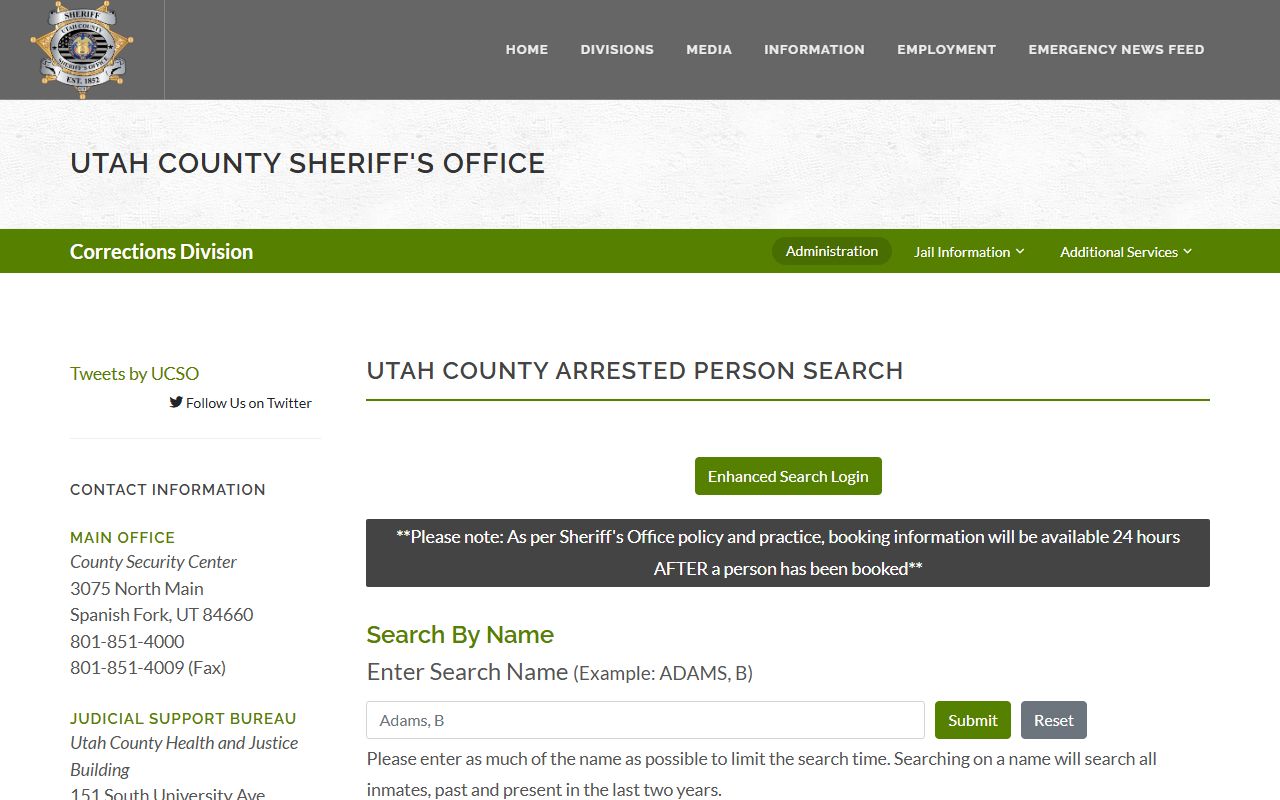
That county page matters because it shows the custody side after the city report is written. It is not the same record as the Eagle Mountain request, but it often answers the next question. If the case turns into a warrant question, the county warrant search can help too, and it gives you another route when the city file has already done its part.
The county records division is also in Spanish Fork at 3075 North Main, which is useful when a request has to move beyond the city office. For court work, the Utah courts records system is the final step. That system tells you what happened after the arrest, which is often the piece people need when the blotter entry alone does not explain the outcome.
Eagle Mountain Police Blotter and GRAMA
GRAMA is the rule set that controls release, redaction, and timing for Eagle Mountain Police Blotter records. The state law at Utah GRAMA statutes says records are presumed open unless a specific classification keeps them back. That is why a police blotter request can produce a public record, a partially redacted record, or a record that stays closed until the case is ready. The city does not need a complicated process to follow the law. It just needs the request to be specific enough to locate the right file.
Eagle Mountain City Recorder is the office that manages the city's records side, and the page explains that requests run through a GRAMA form with fees applied when needed. If the city denies part of a request or needs more time, the Utah State Records Committee is the next place to look for an appeal. The committee is part of the state records system, so it is useful when a local response does not settle the question. That is especially true for police records that may involve an active investigation.
Older Eagle Mountain Police Blotter work can also move into the Utah State Archives or the state's criminal records resources. The archives criminal guide is helpful when the incident is historic or the live city file no longer covers the date you need. Utah BCI criminal records is the better statewide fallback when the search turns into a criminal-history question instead of a local report request. Those state sources do different jobs, but they all help keep the search grounded in the actual record trail.
The result is simple. Eagle Mountain starts local, but it does not end local every time. A city request, a county roster, a court case, and a state records appeal can all be part of the same Eagle Mountain Police Blotter search. The more exact the request, the less time the office spends on guesswork.
Utah County and City Links
Eagle Mountain is in Utah County, so the county page is the next step when the local police blotter trail moves into booking, warrants, or court records. The nearby city pages help when the incident started just outside Eagle Mountain or when another Utah County department handled the first call.
Nearby Utah Cities
Nearby city pages help when the call crossed a line or when the patrol officer was from a different local department. That is common in western Utah County, where Eagle Mountain searches can overlap with more than one city office.