
St. George Police Blotter Search
St. George Police Blotter records are the main city route for reports, request tracking, and incident files in southern Utah's largest city. St. George sits in Washington County and handles a wide mix of calls, from traffic stops to fraud cases and accident reports. That makes the record trail more than a single page. Start with the city records division when you need the local file. Move to the county jail or the courts when the arrest has already passed the first booking stage. GRAMA still controls what the city can release, so the first answer may be partial.
St. George Quick Facts
St. George Police Blotter Requests
The St. George Police Department Records Division handles police-related GRAMA requests. The department says it has ten business days after receiving a written request to provide the record, deny the request, or say that extraordinary circumstances need more time. That timing is important because it tells you when the city must answer. It does not promise a full release. It promises a lawful response. For a St. George Police Blotter search, that response usually starts at the records desk rather than the front counter.
Use St. George Police Department Records Division when you need the city rules, the phone number, or the fee schedule. The department lists Police Records at 435-627-4301 and accepts report requests by email at records@sgcity.org. The department also states that records may not be ready if the case is under active investigation. That is a common reason for a partial answer, and it is why the city may hold some material until the case is done.
This image from St. George Police Department Records Division shows the city records page used for a St. George Police Blotter request.
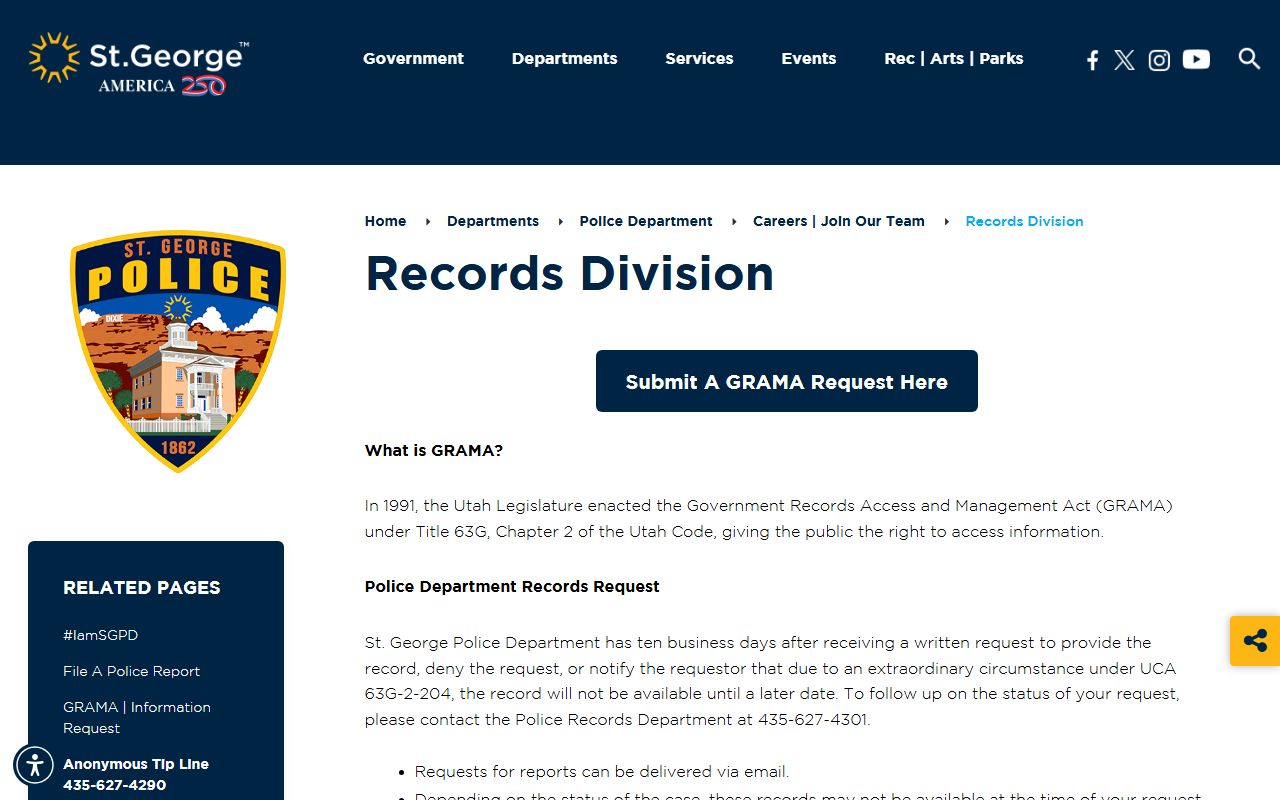
The page is the city's best starting point when you need the formal request rules, the records phone line, and the fee details in one place.
The fee schedule is detailed. The city says staff time for preparation, review, and redaction is $18.82 per hour, with the first 15 minutes free. Black and white copies are $0.25 per page, color copies are $0.50, photos are $5 per CD, and dispatch audio is $47.43 per hour. Those numbers matter because a St. George Police Blotter request may be cheap if the file is short, but it can cost more if the request needs review or audio release.
St. George Police Blotter Portal
St. George also uses a NextRequest portal for the city recorder, police department, and fire department. That portal is useful when you want to submit a request, track it, and keep the record of the exchange in one place. The city says the system was built around transparency, accountability, and accessibility. That makes it a practical option when you do not want to rely on a phone call alone. A portal can also give you a reference number for follow-up.
Open the portal at St. George police records request portal. The portal explains the public-record categories and how GRAMA fits them. It also makes clear that an extraordinary circumstance may add time beyond the normal ten business days. That is the part many requesters miss. The portal helps you see that the city is not ignoring the request just because the answer takes longer than expected.
This image from St. George police records request portal shows the online system used to track a St. George Police Blotter request.
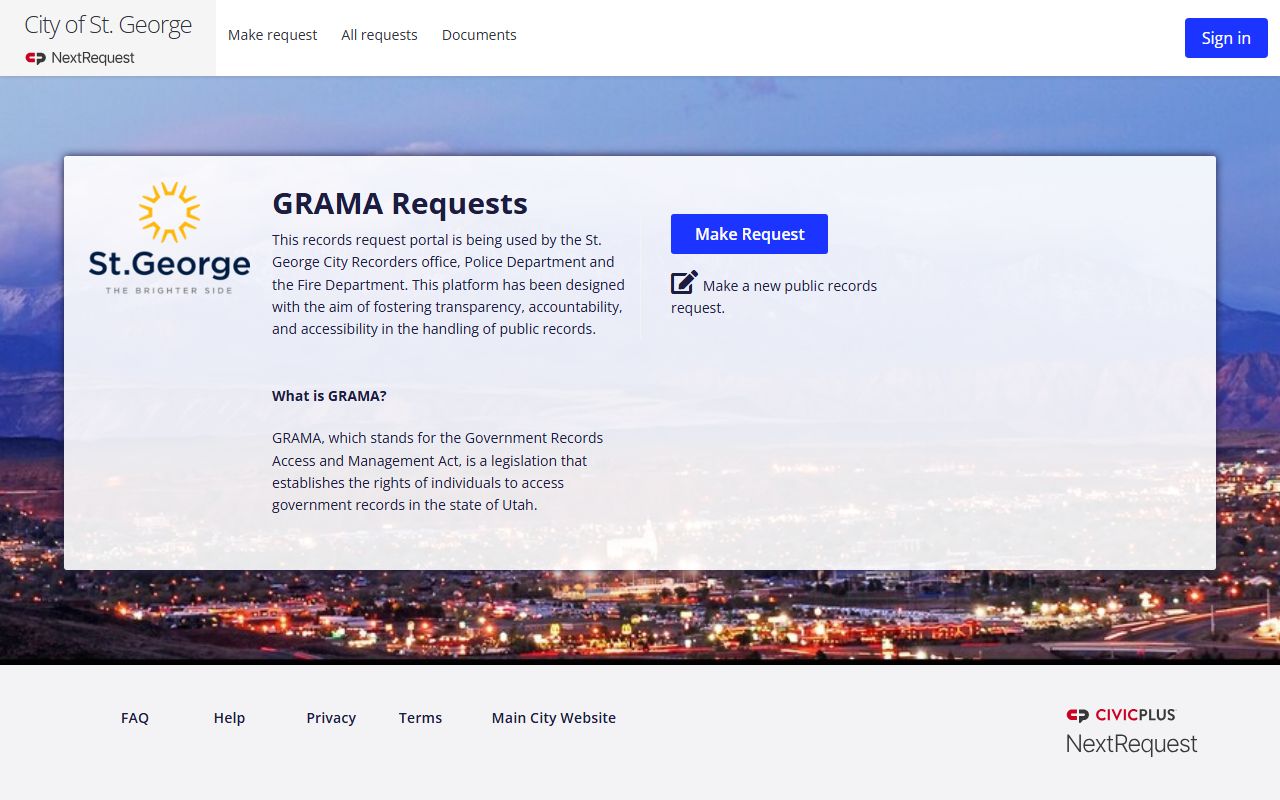
The portal is useful when you want to watch the request status and keep the paper trail tied to the city itself rather than to a third-party form.
The portal also helps when you need to understand record categories. GRAMA treats public, private, protected, and controlled records differently. A police report can therefore be open in part and withheld in part. St. George uses the portal to make that process easier to follow, which is helpful when the request is about body camera material, call logs, or an accident report that still needs redaction.
Washington County Jail Records
When a St. George arrest moves into custody, the Washington County jail system becomes the next place to check. The county support research points to the Purgatory Correctional Facility, also called the Washington County Jail, as a way to search current inmates and view mugshot information. The jail side matters because arrest to booking can take a few hours or longer, and some local departments may hold a person before transport. That timing can make a search look empty when the person is simply not booked yet.
For a custody directory, see Purgatory Correctional Facility inmate search and mugshots. The research says the facility is at 750 South 5300 West in Hurricane and that the jail roster can update once a day or even every 15 minutes. It also says recent arrestees may stay at a local department for up to 72 hours before transport. That is a useful reality check when the St. George Police Blotter page does not yet show the booking you expect.
For a second custody path, Vinelink at Vinelink can give release or transfer alerts for participating facilities. That does not replace the local jail file, but it is useful when a person has already been booked and you need a status update later. A St. George search often works best when you use the city records page first and the jail or VINE second.
St. George Police Blotter and GRAMA
GRAMA is the legal frame that controls access to St. George records. Under Utah Code Title 63G Chapter 2, a government record is presumed open unless a classification or exception says otherwise. The St. George procedures explain that the city can withhold records while an investigation is active, and it can also redact protected or private material. That is why a St. George Police Blotter request may return the main report but keep some names, notes, or audio from public view.
City fees also matter under GRAMA. The statute allows reasonable actual costs, and the St. George schedule gives you the local rate. If the request is simple, the price may stay low. If the request needs review, redaction, or audio preparation, the fee can rise. The city also says a requester may qualify for an expedited five business day response when the public interest justifies it. That option is narrower, but it can matter when the records are tied to a fast-moving public issue.
The department's procedures note that a request should include the requester's name, mailing address, daytime phone number, and a description specific enough to identify the record. That is the cleanest way to avoid delay. If you can name the date, case number, or type of report, do it. The city can work faster when the request is clear.
Note: St. George can release a record and still redact parts of it, so the first copy is often a starting point rather than the final version.
St. George Court Records
Once a case is filed, the court file becomes the next step after the city police record. The Utah courts records system is where you look for hearings, case numbers, and results. That is the legal side of a St. George Police Blotter search. The courts record shows what happened to the charge after the arrest. The jail page shows custody. The city report shows the first response. All three can matter in the same search.
Use the Utah courts page at Utah courts records when you need the filed case side of the story. If you are researching older material, the Utah State Archives criminal guide can help with archived police and criminal records. That is less common for a fresh St. George arrest, but it matters when the search turns historical or when the live city system no longer has the old file.
The St. George Police Department also says it offers anonymous tips, fraud packet resources, and a records division contact point. Those services are not the same as court records, but they show how many record paths can exist around one incident. A careful search uses the city, the county, and the state court side together.
Request Details
The cleanest St. George request is a specific one. The city says it wants transparency, but the request still has to be narrow enough to identify the file. That is true for police reports, traffic accident reports, and other law-enforcement records. It is also the best way to avoid a back-and-forth with the records desk.
Include the basics below if you have them:
- Name of the person involved
- Date or approximate date of the incident
- Case or report number, if known
- Your contact information for follow-up
If you need a traffic accident report, the city procedures note that those can be ordered through the department's accident-report system. If you need a police report, email or portal submission is often the fastest route. Either way, the more exact your request, the easier it is for the city to match the right file.
Washington County and City Links
St. George is the main population center in Washington County, so county and city records often overlap. Use the county page when the custody or jail side is the better fit, and use nearby city pages when the arrest or report started somewhere else.
Nearby Utah Cities
Use nearby city pages when the request belongs to a different department or when you need to compare how another Utah city routes police records, jail data, or GRAMA requests.