
Salt Lake City Police Blotter Search
Salt Lake City Police Blotter records are the right place to start when you need a city arrest lead, an incident report, or a records request path in Utah's capital. The Salt Lake City Police Department keeps local reports, the Public Safety Building handles in-person service, and the county court side can carry the case forward after filing. That makes the search simple in one way and split in another. Start with the police department, check the booking or court trail, and use GRAMA when you need a record that is not already posted online.
Salt Lake City Quick Facts
Salt Lake City Police Blotter Basics
Salt Lake City Police Blotter searches usually begin with the city police department, because SLCPD handles the reports, supplements, and many of the public requests tied to city incidents. The department also provides online reporting for some non-emergency matters. That gives the public a direct path before a paper request is needed. If the incident ended in arrest, the county jail roster or court record may add the next layer. Salt Lake County is large, so the same name can show up in more than one place. A good search follows the city record first.
The city explains that reports may be requested online through its GRAMA portal or in person at the Public Safety Building, 475 South 300 East, Salt Lake City, UT 84111. The records desk is open Monday through Friday from 12 p.m. to 4 p.m., except holidays. Fees are also posted: $15 per report up to 50 pages, $0.25 per page after that, and $33 for body cam video requests. Those details matter because they tell you what the city can charge before you decide whether to ask for a copy or just confirm the basic case facts.
For Salt Lake City, a police blotter entry is often only the front door. You may still need the report number, the body-cam request, or the court case path. Use the city page to get the first public version, then move to county or court sources when the file grows past the basic incident summary.
This page from Salt Lake City Police GRAMA requests is the city's main records doorway for reports and footage.
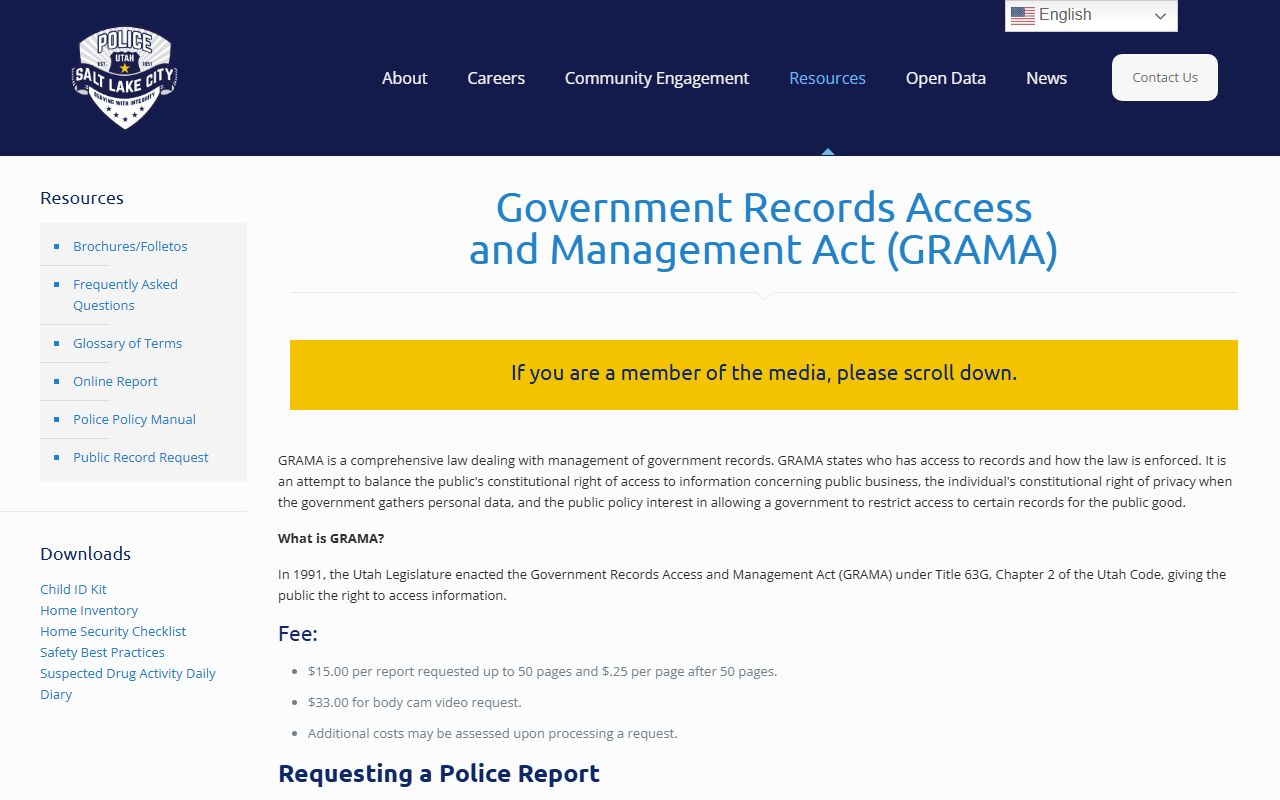
That record path is the city-level source to use when a Salt Lake City police blotter entry is not enough on its own.
Salt Lake City Police Blotter Search
The Salt Lake City Police Department site at slcpd.com is the main place to start when you need a local police blotter lead. The department notes that it provides online police reporting for certain non-emergency incidents and that the Records Division handles GRAMA requests. That split is useful. If you need an incident report, the city records desk can point you the right way. If you need only to confirm that a call was logged, the site may already have enough context to guide the next step.
The department also uses the Public Safety Building as its public-facing records hub. That building is where in-person requesters go for the records desk, and it is also where the city directs people who need follow-up on reports or camera footage. If you have a date, a location, and the names of any people involved, the search is usually much easier. The city is large, but the record path is fairly clear once you know which office touched the incident first.
This image from Salt Lake City Police Department shows the city agency that handles local police blotter requests and reporting.
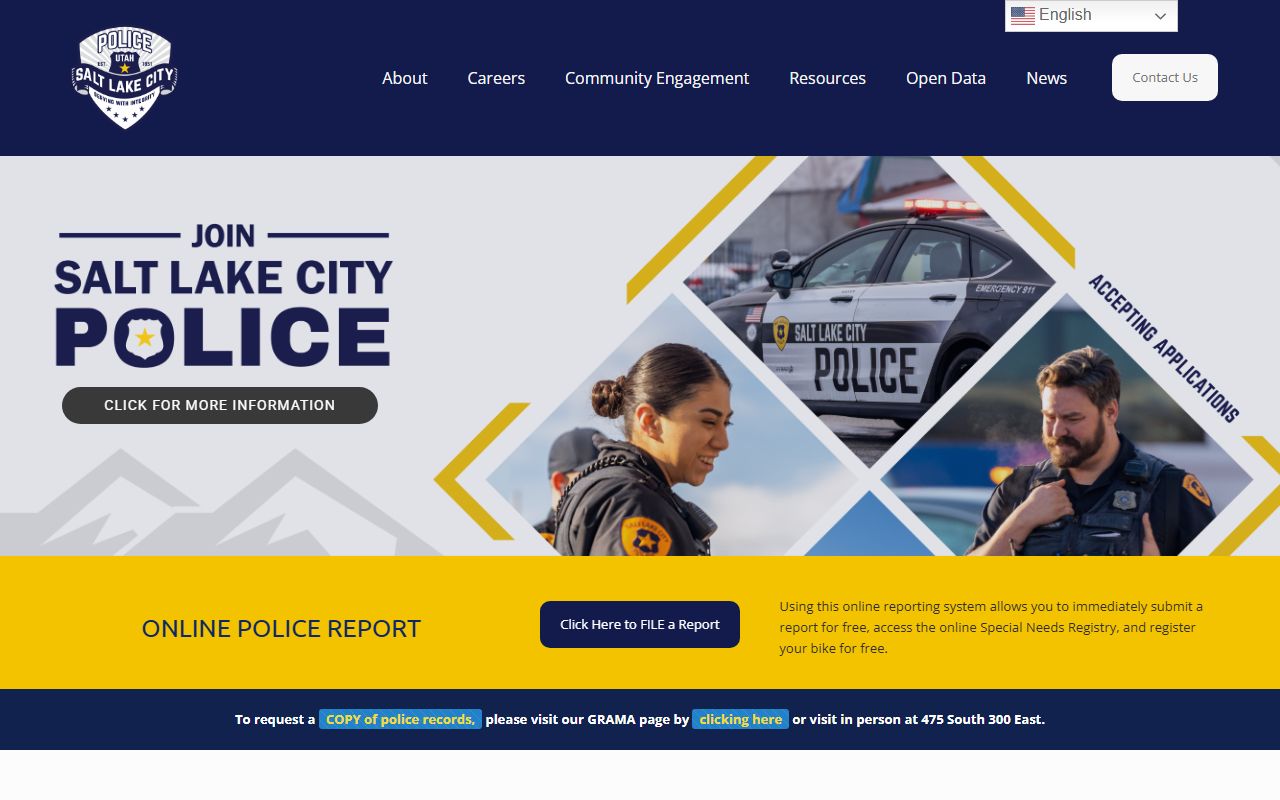
Use the department page to confirm the public service path before you move to a records request or a court search.
The city also points people to the Salt Lake City Public Safety Building for public records service and walk-in access. That matters if you want to speak with staff instead of using the portal. The building houses the records function and keeps the police blotter search connected to the office that actually processes the request.
The Public Safety Building is the practical stop when an online search is not enough and you need help from the records desk.
Salt Lake City Police Blotter Requests
Salt Lake City uses GRAMA to manage most police records requests. Under Utah Code Title 63G Chapter 2, the city starts from openness, then reviews whether any part of the file is private, protected, or tied to an active case. That is why one person may get a report quickly while another gets a partial release. The city also explains that requesters need two current IDs from different categories if they submit in person, and a Driver Privilege Card is not accepted as the only ID.
If you mail a request, the city gives a records address for SLCPD Records at P.O. Box 145497, Salt Lake City, UT 84114-5497. The request should name the report, the date, and any other details that help staff find the file. For body cam, the fee is separate from the report fee. For reports, the first 50 pages are priced differently than later pages. Those are the kinds of details that make a city police blotter search feel procedural, not random. They also keep the request on the right track the first time.
Salt Lake City police records often sit alongside county custody data. If a person was booked after the arrest, the county jail roster may show the current status while SLCPD holds the incident report. That split is common in Salt Lake County and it is why city, county, and court pages work best together.
Note: A Salt Lake City police blotter entry can be public even when the full report still needs review or redaction under GRAMA.
Salt Lake City Police Blotter and County Records
When a city arrest turns into a county booking, the Salt Lake County sheriff roster becomes the next place to check. The county page can show booking status, housing details, and the current custody picture. That is useful because the city report tells you what happened, while the county roster tells you where the person is now. Salt Lake County also receives requests for city, county, and Unified Police records through different offices, so it helps to know which agency created the file before you ask for a copy.
The county side is particularly important if you want to connect a city incident to a court filing. Salt Lake County court records, city reports, and the sheriff roster are three different pieces of the same public record trail. A good Salt Lake City police blotter search uses all three. It is not faster to guess. It is faster to match the office to the record type the first time.
For county backup, the Salt Lake County police blotter page pulls together the county roster, city record paths, and court routes in one place.
Salt Lake City Police Blotter History
Salt Lake City has a strong archival trail, which helps when the incident is old. The Salt Lake City Archives keeps historical police records, including police blotters, arrest logs, and incident reports from the city's early history. The archives are located at 610 E. 500 S., Salt Lake City, UT 84102, and access is by appointment. That gives researchers a way to trace older city police blotter entries that no longer live on a modern records page.
The archives are especially useful when you need a historical check, a family history lead, or a long-tail record that predates current digital systems. They do not replace the police department or the county jail, but they can fill the gap when a current search stops too soon. In a city as old and well documented as Salt Lake City, that difference matters. The archives can show the past record trail, while the police department handles the present one.
Historical records do not always carry the same search rules as current incidents. That is why the archives page matters. It tells you where to look when a modern police blotter search turns into an older records search instead.
Salt Lake City Police Blotter Fees
Fees for Salt Lake City police records depend on the request. The city posts a $15 report fee for requests up to 50 pages, then $0.25 per additional page. Body camera requests are posted at $33, and the city says other costs may be assessed after processing. Those fees are not unique to police blotter work, but they are important when you need the full file instead of a quick confirmation.
Because the city handles many kinds of requests, it is smart to be specific. Say whether you need a report, an incident log, an accident report, or body camera footage. That lets the records desk route the file and estimate the fee more accurately. If you are only trying to confirm whether an event happened, the online and in-person options may still get you enough detail without a full copy order.
Note: Fee totals can change after review, especially if the city has to redact or pull larger files from storage.
Salt Lake City Self Help
Some people need the city records path because they are gathering their own case file. Others need it because they are trying to match a report to a later court action. Salt Lake City provides enough public material to make that possible, but the route is easier when you keep the request narrow. Use the online portal for the first pass and the Public Safety Building if you need a human answer. For court follow-up, Salt Lake County and the Utah courts stay in the chain.
The search is cleaner when you keep these pieces in mind. The police department records the incident. The county may show the booking. The court decides the filed case. If you need historical context, the archives can help. That is the basic Salt Lake City police blotter path in Utah's largest city, and it works best when you use the city office that actually created the record.
Salt Lake County Police Blotter Link
Salt Lake City is in Salt Lake County, so a city arrest may quickly connect to a county booking or a county court file. If you need that next step, use the county page for the jail roster and county records path.
Nearby Cities
Nearby city pages help when the record started outside Salt Lake City limits or when a second agency handled part of the case.