
Search San Juan County Police Blotter
San Juan County Police Blotter records help you track an arrest, a jail booking, or a case that may have started far from the nearest courthouse. San Juan County is Utah's largest county by area, and that size changes the search. A call can begin in Blanding, move through Monticello, or involve a tribal or federal partner before it reaches a county file. The sheriff, the justice courts, and city police each hold a different slice of the record trail. Start with the office that handled the call, then move outward if the file is split across more than one place.
San Juan County Quick Facts
San Juan County Police Blotter Basics
San Juan County keeps its law enforcement work spread across a wide map. The sheriff serves the whole county, while Monticello and Blanding each provide city-level public safety routes for local incidents. That matters because a police blotter search in this county can start with a city report, then move to the sheriff's jail side, then end up in court. The county also works in a place where federal land, tribal lands, and remote roads all affect response and recordkeeping. A search should reflect that reality instead of assuming one office holds everything.
The Monticello Public Safety page at Monticello Public Safety is a strong local starting point because it routes complaints, report forms, justice court payments, and sheriff department access through one city page. That is useful when you need to know whether the record belongs to the county sheriff or to a city department first. The Monticello Police Department page at Monticello Police Department adds the city's own law enforcement contact path. For Blanding, the city public safety page at Blanding Public Safety gives you the other local branch in the county.
The county is large enough that search and rescue, jail intake, and patrol work can all be separate steps. San Juan County also coordinates with Navajo Nation Police and federal agencies when an incident touches tribal or federal land. That is why a San Juan County Police Blotter entry may be a lead, not the whole record. The county file, the city report, and the court case can all be different documents.
San Juan County Police Blotter Search
A San Juan County police blotter search usually starts with the office that handled the first call. If the incident began in Monticello or Blanding, the city police page may be the fastest way to find the report. If the person was booked into county custody, the sheriff's office becomes the next stop. If the matter moved quickly into court, the county justice court or district court will carry the rest of the trail. Each office owns a different piece of the same public record chain.
For the sheriff side, the research points to the San Juan County Sheriff's Office in Monticello as the county law enforcement hub. The office maintains jail operations, booking information, patrol coverage, and GRAMA requests. Because San Juan County stretches across remote canyon country and into tribal and federal areas, the same name may appear in more than one place. A good search uses the date, the location, and the agency name to keep the query tight. If you already have a booking number or case number, use it.
This page from the Utah State Archives criminal records guide shows where older arrest and police blotter material can be found when the county search turns historical.
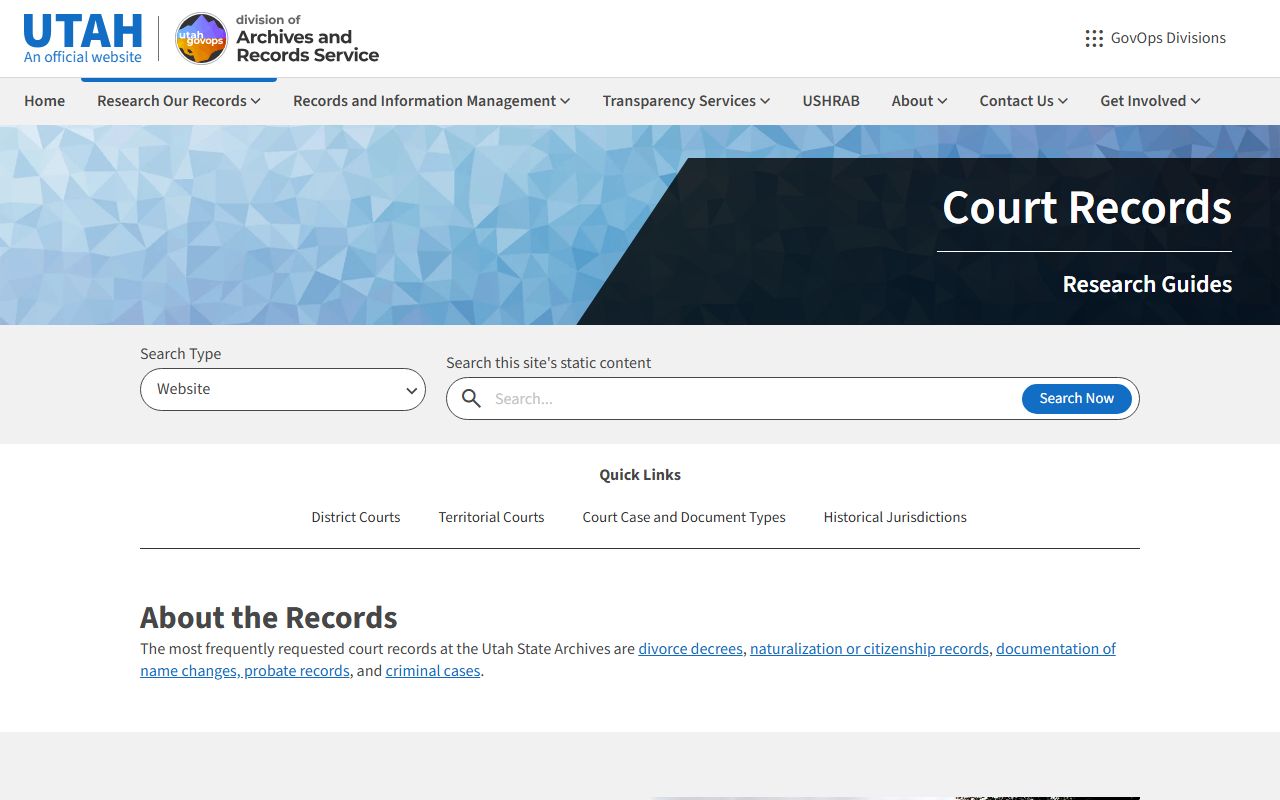
The archives route is especially useful in a county this large, because older records may sit outside the active sheriff or city systems and still remain important to the search.
San Juan County Police Blotter and Courts
Once a San Juan County arrest becomes a filed case, the court record becomes the next layer. The county justice court handles misdemeanors and ordinance violations. The county also has district court matters in Monticello, which is where more serious case activity and later filings can appear. That split matters because the blotter tells you what happened, but the court tells you how the county handled it. If you want a result, you need the court file. If you only want a booking, the jail record may be enough.
The Utah courts contact page for the county at San Juan County - Monticello court contact provides the courthouse address and phone number for local follow-up. That is useful when you need to confirm whether the record sits with the justice court or the district court. The statewide court records page at Utah courts records is the broader search path when you already know the case may have been filed. For juvenile matters, the county has separate court handling and tighter privacy rules.
San Juan County is also the sort of place where a report may move between agencies after the first contact. If a city officer writes the report and the sheriff books the person, the county court will still be the final public step. That is why the county page should keep both city and court routes visible. It saves time and keeps the search from stopping too soon.
San Juan County Police Blotter Requests
GRAMA is the rule that governs most San Juan County records requests. Under Utah Code Title 63G Chapter 2, the county starts from openness and then reviews whether any part of the file is private, protected, or controlled. That is why a booking entry may be public while witness details or active-investigation notes stay back. It also means the county can ask for more specifics before it releases a report. A clear request is almost always the faster request.
For a San Juan County request, keep the ask short and specific. Name the person, the date, the city or area, and the type of record you want. If you are asking for a sheriff booking, say that. If you want a city incident report, send the request to the city first. The Monticello Public Safety page and the Blanding public safety page both show how local requests can be routed through city offices before they are reviewed under GRAMA. That helps when the county file and the city file are not the same thing.
San Juan County's rural geography can make response timing feel slower than the clock suggests. Even so, the 10 business day GRAMA rule still applies, and the county should answer within that window unless it explains an extraordinary circumstance. The public safety page in Monticello also gives a non-emergency contact line, which is useful when you need to ask where the record belongs before you file the request.
Note: A San Juan County police blotter result can be public and still incomplete, especially when tribal coordination or an active investigation affects what the county can release.
San Juan County State Records
Older San Juan County police blotter work often ends at the state level. The Utah Bureau of Criminal Identification handles official criminal history requests, and the Utah State Archives preserve older arrest and police blotter series. That matters in a county where a lot of law enforcement activity takes place far from the main town centers and can be archived sooner than a user expects. If the county page does not show the answer, the state record trail may still do the job.
The Utah BCI criminal records page at Utah BCI criminal records is the state path when the question turns into official criminal history rather than a local incident report. The archives guide at Utah State Archives criminal records guide is the better route when the file is old enough to fall out of active county systems. Those two sources do different work. One is the live state repository. The other is the historical record trail.
That difference is useful in San Juan County because some incidents are tied to search and rescue, federal lands, or tribal coordination, and the first public entry may not tell the whole story. When that happens, use the county record as the lead, then use BCI or the archives to fill in the rest. A well-built San Juan County Police Blotter search should always give you a place to go next.
Nearby County Records
San Juan County sits on the edge of several other Utah record systems, so a search can jump counties more often than you might expect. If a name does not show up where you first look, compare the county with nearby records pages and see whether the case was booked, filed, or transferred elsewhere.