
Emery County Police Blotter Search
Emery County police blotter records usually start at the sheriff's office in Castle Dale and then move toward the court, jail, or state records path. The county covers a large rural area that includes Castle Dale, Huntington, Ferron, Orangeville, and the San Rafael Swell region, so a search can involve more than one office. If you only need the first public clue, begin with the sheriff. If you need the court file or a copy, use the county GRAMA process and the justice court side of the record trail.
Emery County Quick Facts
Emery County Police Blotter Basics
The Emery County Sheriff's Office is the local center for arrest reports, incident reports, accident reports, and jail booking records. That makes it the first office to check when you are trying to confirm whether a person was booked or whether a rural stop created a paper trail at all. The county research says the sheriff also coordinates search and rescue in the San Rafael Swell and mountain areas, which means some records may involve incidents that are not traditional arrests. That is worth remembering when the search does not look like a normal city case.
The sheriff processes GRAMA requests and requires identification for record pickup. The county research also says the first 15 minutes of staff time are free, after which copy and redaction fees can apply. That is a practical detail if you need body camera video or a longer report. A county search should stay as narrow as possible so the office can find the right record and tell you whether any part of it is restricted.
The sheriff's office page at emerycounty.com/sheriff is the official county source for records requests, dispatch, and jail-related information. The county may have a thin web presence, but the local office is still the proper starting point for an Emery County police blotter search.
This state GRAMA page at Utah Code Title 63G Chapter 2 is the backup source that governs how Emery County releases records.
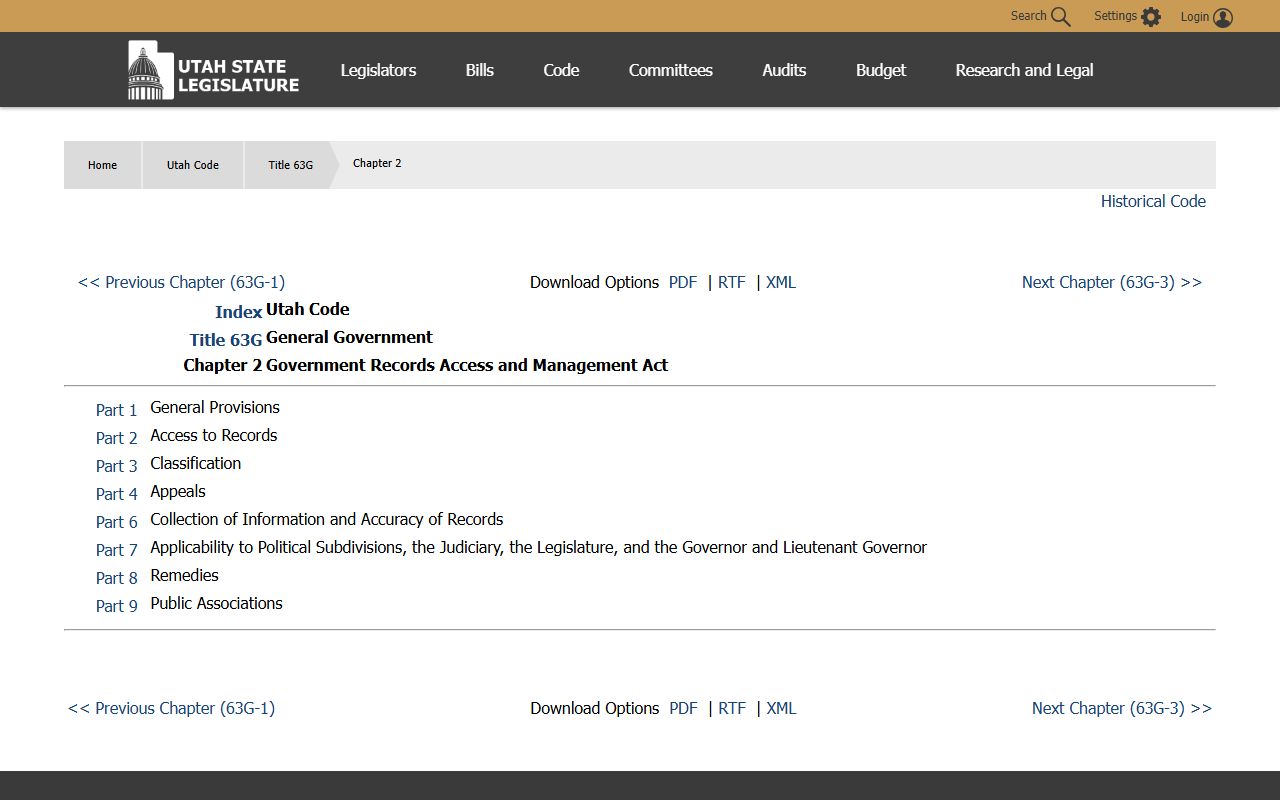
The image shows the state law that controls how county records are classified, reviewed, and released.
Emery County Police Blotter Search
Emery County police blotter searches work best when you start with the sheriff and then move to the court. The county research says the sheriff maintains booking records, while the Seventh District Court in Castle Dale handles prosecution cases. That means a booking page can tell you that someone was taken into custody, but the court file tells you what happened after that. If you are trying to track a rural arrest, that split is the difference between a short lead and the full record.
The county also says arrest reports, incident reports, accident reports, and jail booking records are available through the sheriff's office. Body camera video may be subject to redaction and additional fees. That matters because a police blotter search is often just the first step toward the record you actually need. If you know the date, the location, or the type of call, include that in the request so the office can focus its search.
Because Emery County covers a wide rural area, search and rescue events may show up alongside ordinary arrest records. Those files are still part of the county record trail. If the incident happened in the mountains or on a remote road, the sheriff may be the only office that can tell you where the report went next.
For the local starting point, the sheriff page at emerycounty.com/sheriff is the best source for Emery County police blotter request details.
Emery County Police Blotter and Court Records
The Emery County Seventh District Court is the next stop once a police blotter entry turns into a filed case. The county research says the sheriff works with that court in Castle Dale, which is a helpful clue because the court file and the sheriff file answer different questions. The court will show filings, hearings, and outcomes. The sheriff file will show the arrest, the booking, and possibly the jail side of the record.
If you need a court document, the clerk is the right office. If you need the initial report, the sheriff is the right office. That split is important because a broad request to the wrong desk often slows the search down. In a county this size, being precise helps more than being broad. If you only have a name, add the approximate date and the type of event so the right office can find the right file.
For statewide backup, the Utah courts records system at utcourts.gov/records can help confirm a case that started in Emery County but later moved into the court system. If you are checking a matter that is older or partly sealed, the court record may still be the cleanest way to prove the status of the case.
Emery County Public Records
Emery County follows GRAMA, so the law starts from public access. Under Utah Code Title 63G Chapter 2, the county should answer within ten business days unless an exception applies. The county research says the first 15 minutes are free and that fees apply for copies and video redaction after that. That is useful when you are trying to decide how much you want to ask for at once.
Some records can still be restricted. Active investigation material, private information, and protected data may be withheld or redacted before release. That does not mean the record is not there. It means the county is applying the same access rules Utah uses everywhere else. If a request is urgent, say so clearly and explain why the request should be expedited.
Emery County also handles dispatch, concealed carry applications, and search and rescue through the sheriff's office. That broad role means one office can touch several kinds of records. A focused request helps the sheriff staff know whether you need an arrest report, a booking note, or a record tied to a civil or rescue call. The clearer the ask, the cleaner the answer.
Note: Emery County police blotter records may be brief online, but the sheriff and court files still carry the details when the case needs a deeper review.
Emery County State Records
State resources matter when the county file is thin. The Utah Bureau of Criminal Identification gives the official criminal history path, and the Department of Public Safety public records portal can help if the record was created by a state office instead of the county sheriff. Those tools do not replace the local blotter, but they are useful when a case moves beyond the county or when you need a statewide answer.
BCI at bci.utah.gov/criminal-records is the proper state-level route for criminal history questions. The DPS portal at publicsafety.utah.gov is a good fallback if a state trooper or another state public safety unit made the record. If the matter is historical, the Utah State Archives can also be a better fit than a modern roster page.
Emery County Copies
To get copies, start with the sheriff if you need the arrest report, the incident report, or the booking record. Start with the court if you need the case paper. If the record includes body camera video, be ready for extra review time and possible redaction fees. That is normal and does not mean the request failed. It just means the county has to process the file before it can release it.
Use the same core details in every request: full name, date of birth if known, approximate date, and the type of record you want. Add the location or incident type if you have it. Emery County covers a lot of open ground, and a few good details make a big difference when the office is trying to find the right page.
Emery County police blotter searches are best when the sheriff, the court, and the state records path are used as separate steps instead of one broad request.
Nearby County Records
If an Emery County search comes up short, nearby counties can still help. Rural arrests and transports sometimes end up in a neighboring county before the public side updates. Checking nearby pages can confirm whether the booking or case moved somewhere else.