
Search Rich County Police Blotter
Rich County Police Blotter records are a practical starting point when you need to trace a booking, check a rural arrest, or sort out which office in northern Utah has the next record. Rich County is small, but its search trail is not simple. The sheriff serves Randolph, Garden City, Laketown, and the Bear Lake area, while the jail may have limited capacity and move inmates to neighboring counties. That means a clean search often starts with the sheriff, then shifts to the court, then moves to state resources if the local file is thin.
Rich County Quick Facts
Rich County Police Blotter Basics
Rich County keeps its police blotter path close to the sheriff's office in Randolph. The office serves Randolph, Garden City, Laketown, and the rural Bear Lake corridor, which means tourism, boating, and winter travel can all shape the kind of record you find. The research also notes seasonal population swings and added patrol work around Bear Lake. That matters because a summer incident may be handled very differently from a winter stop on a rural road. In a county this small, a booking may appear quickly, but the full file may still live in another county or at a court desk.
The sheriff's office is also where Rich County GRAMA requests go. The office says forms are available and standard response times apply. That makes the sheriff the right first stop for arrest logs, incident reports, and other law enforcement material. If the matter turns into a court case, the First District Court in Randolph becomes the next place to look. If the jail cannot hold the inmate long term, a neighboring county may end up with the custody record. Rich County searches work best when you expect that split from the start.
Rich County's official sheriff page at richcountyut.org/sheriff is the county source for records, dispatch, and the offices that handle the first public record trail.
Rich County Police Blotter Search
A Rich County police blotter search usually begins with a name and a place. Randolph, Garden City, and Laketown are the most useful location names because they tell the sheriff which part of the county you are asking about. If the event involved Bear Lake patrol, boating safety, or a seasonal crowd, add that context too. The county's small staff and rural geography mean that exact details save time. A vague request can take longer than the record itself.
The county also uses limited jail space, so a person may be housed elsewhere even when Rich County handled the arrest. That is why the blotter entry and the custody record are not always the same thing. The sheriff may have the initial contact report, but the jail bed or transfer note can sit in another county. If the name does not show in the first search, that does not end the search. It means you need to widen the net in the right direction.
This screenshot from Utah GRAMA statutes shows the state access rules that govern a Rich County request.
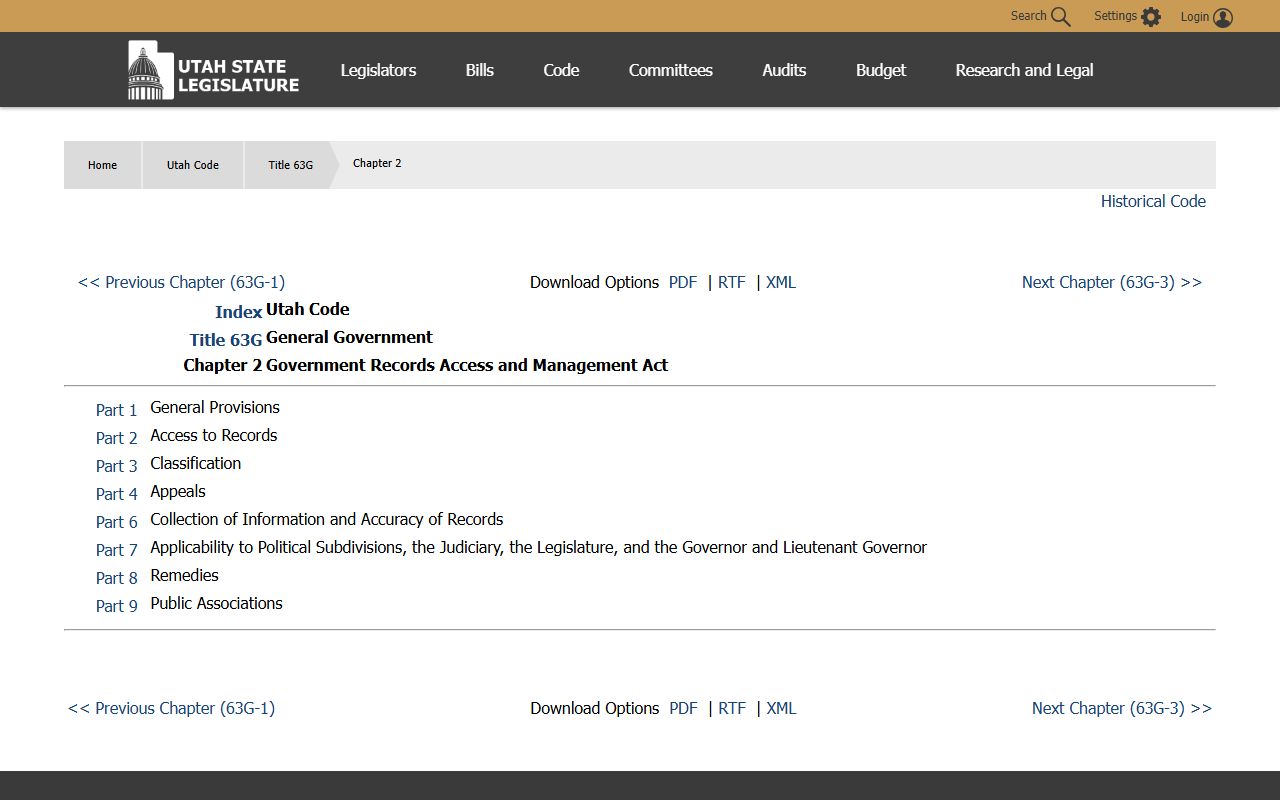
The GRAMA page is the best statewide reference when you need to know why Rich County may release one part of a file and hold another.
If you need a historical or older record, the Utah State Archives criminal guide at Utah State Archives criminal records guide is the backup route. It is not a substitute for the sheriff, but it is useful when a Rich County search turns into an older record hunt or a local file is no longer online.
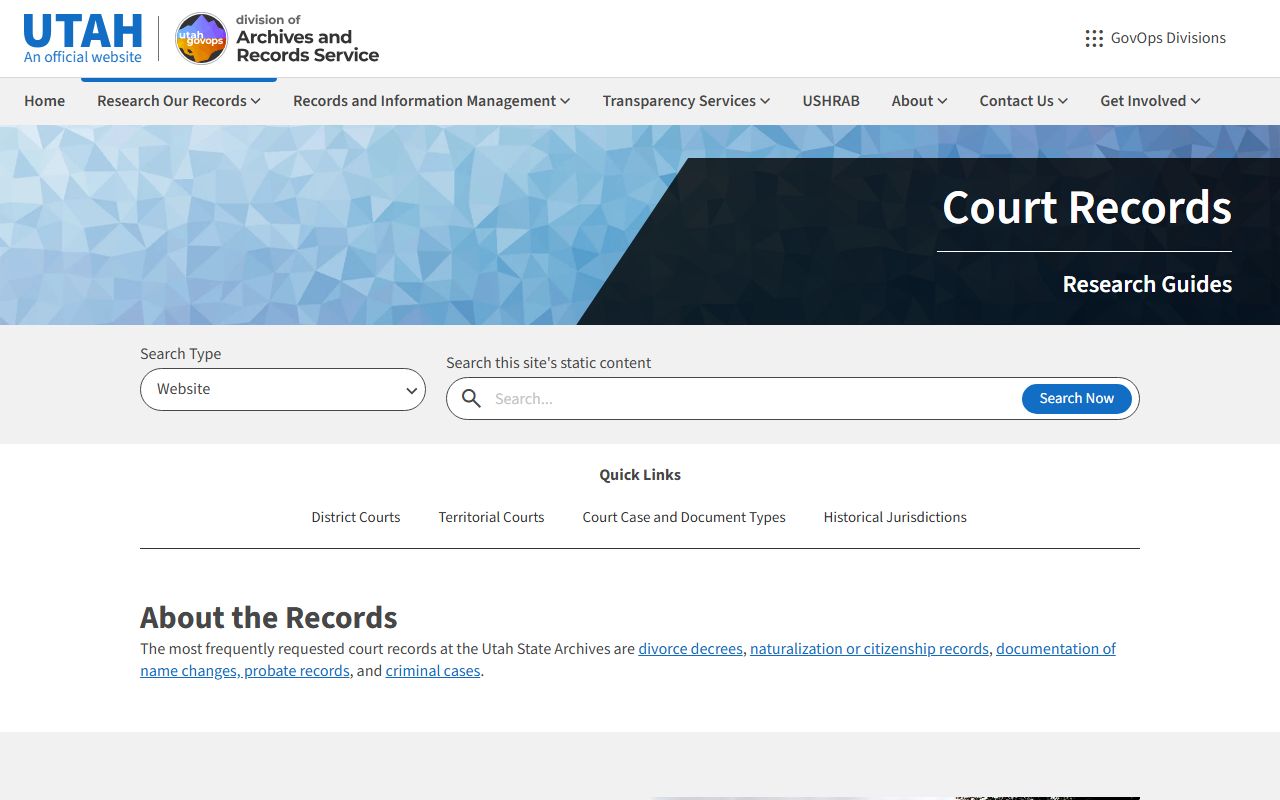
That guide is especially useful when the local county file is sparse and you need the older arrest or blotter trail instead.
Rich County Police Blotter and Court Records
The court side matters as much as the sheriff side in Rich County. The county cases are filed with the First District Court in Randolph, and the court meets on a scheduled basis. That means the court file may not be as immediate as a city or county roster, but it is the record that tells you what happened after the arrest. The Rich County Justice Court also handles local misdemeanors in Randolph. If the sheriff tells you a case moved forward, the court file is where you verify that step.
Rich County police blotter work is easiest when you see the full chain. The sheriff documents the stop or booking. The court documents the charge and disposition. The jail or transfer note tells you where the person is held. When the jail is limited, the custody piece may live outside the county even when the offense did not. That is normal in Rich County, and it is why a court search and a custody search should be done together.
If you need the Utah courts route, the state courts records page at utcourts.gov/records is the cleanest statewide starting point for case information tied to a Rich County arrest.
Rich County GRAMA Requests
GRAMA controls Rich County records access just as it does everywhere else in Utah. The sheriff's office accepts the request, and the law gives the county a response window for written requests. That means the request should be specific enough to find the file, but not so broad that it slows the response. Name, date, and location are the most useful pieces. If you know the event involved Bear Lake patrol, winter operations, or search and rescue, include that too.
Under Utah Code Title 63G Chapter 2, the county can redact or withhold parts of a record that are private, protected, or tied to an active case. That is especially important in a small county, where even a basic arrest can involve sensitive local details. The rule does not erase the record. It just controls how much of it is public right away. If the file is denied or only partly released, the state records rules and court review remain available as a next step.
Rich County's small staff also means civil process, dispatch, and records work can all come through the same office. That makes patience part of the search. The answer may be in the sheriff's file, the court file, or a neighboring county's custody record, not in one quick web page.
Note: In Rich County, the fastest route is usually the sheriff first, the court second, and the state backup tools last.
Rich County State Records
State tools matter when Rich County records are thin. The Utah Bureau of Criminal Identification gives the broader criminal history route, while the Utah State Archives help with older records that are no longer easy to see on a county site. Vinelink can also help if the person has been moved into another facility or if you need custody alerts. Those tools do not replace the sheriff. They help finish the search when the county record is only part of the story.
The BCI page at bci.utah.gov/criminal-records is the state route for official criminal history questions. The archives guide at archives.utah.gov/research/guides/criminal.html is the right backup when the Rich County matter is historical. Rich County police blotter searches often get stuck only because the record is older than the local website. In that case, state records are not optional. They are the next logical step.
If you want a custody alert path, Vinelink is the statewide tool that can help you track transfers or releases after a Rich County booking moves beyond the local jail.
Nearby County Records
Rich County sits at the far north of Utah, so it helps to compare nearby county records if a name is not where you expect. The custody record may be outside the county, and the court file may show up in another office even when the arrest happened locally. A little range usually saves time.