
Search Carbon County Police Blotter
Carbon County police blotter records help you follow a booking from the first jail entry to the court file in Price. The county sheriff handles custody and booking details, while the Seventh District Court keeps the case record once a matter is filed. That split matters when you are trying to find the right paper fast. If you only need a recent arrest snapshot, start with the jail roster. If you need the full story, check the court and state records too. Carbon County uses the same Utah access rules as the rest of the state.
Carbon County Police Blotter Search
The quickest Carbon County police blotter search usually starts with the sheriff. The county jail roster gives you a fast check on current custody, booking time, and the basic charge line. That helps when you are not sure whether a person is still in jail or has already moved on to court. Carbon County also has a smaller public footprint than Utah's biggest counties, so the same name can show up in more than one place. A good search moves in stages. Check the roster first, then the court, then the state history sources if you need older records.
The sheriff's office is the local source for bookings and jail-side records. Visit Carbon County Sheriff's Office for the county contact point and to see how the office handles its public pages. For a fast custody check, the county jail roster at Carbon County Jail Roster shows the current list of people in custody and the basic booking data tied to each entry. Those details can change as soon as a case moves, so use the roster as a live snapshot, not as the final record.
Carbon County Police Blotter Records
The sheriff's office is the best first stop for Carbon County police blotter records, and the office site is where the county explains its patrol, jail, and records work. Carbon County Sheriff's Office gives you the official county source before you move to any third-party summary page. That matters because the public record may be split across a booking log, a jail page, and a court file.
See the county source here: Carbon County Sheriff's Office.
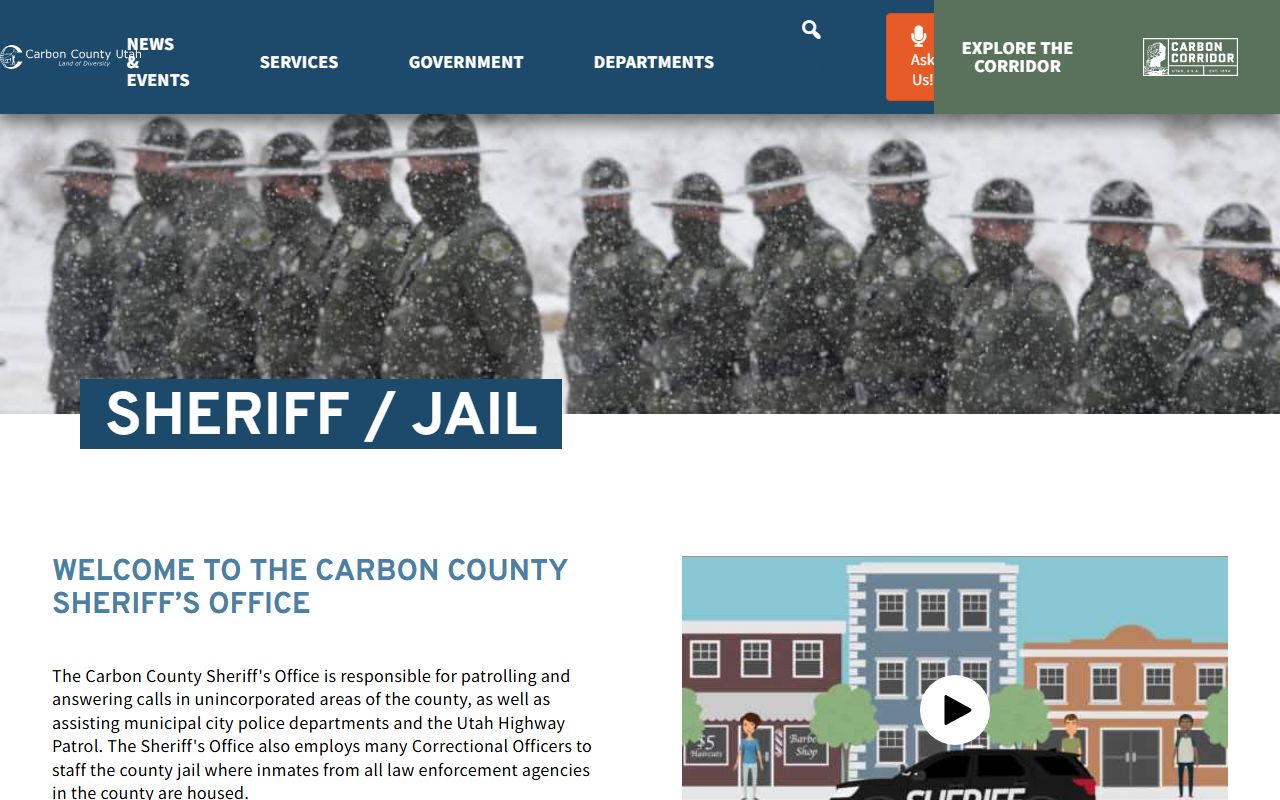
The image shows the county sheriff's office page that anchors the search. It is the right place to confirm where the county sends records requests, what divisions the office runs, and how to move from a booking to a public copy. If you are checking a recent arrest, start there and then branch out to the jail roster and court records.
Carbon County Police Blotter Requests
Carbon County follows Utah's GRAMA rules for public access. Under Utah Code § 63G-2, you may ask to inspect public records, but the county can withhold protected parts when a record is tied to an open case or to personal privacy concerns. That means a booking log may be public while some notes stay back for a time. When the county has to search and copy records, it can charge reasonable fees under the same chapter.
If you make a request, keep it tight and clear. Ask for the record type you want, the name, the date range, and any booking or case number you already have. The sheriff's office is the right place for jail-side records. The court clerk is the right place for filed case papers. Utah agencies generally answer written requests within 10 business days, and they must explain delays or denials when the law requires it. That timing helps, but it does not make every record instant.
For a clean Carbon County request, include these basics:
- Full name and any known aliases
- Approximate arrest or booking date
- Booking number or case number if you have one
- Your return contact information
- Any payment or copy preference the office asks for
Note: A roster entry is only a snapshot, so the court file may show more detail than the jail page does.
Carbon County Jail and Court Records
Carbon County jail records and court records serve different jobs. The jail side shows who is in custody, when the person was booked, and the broad charge line. The court side shows what happened after the arrest. That can include the filing date, hearing dates, plea, disposition, and any sentence that followed. If you are tracking a case from start to finish, you need both records. The county seat in Price is where that paper trail usually starts to get clearer.
The Seventh District Court keeps the filed criminal case record for Carbon County. Visit Seventh District Court for the county court system and the records path used by Utah courts. If you need historical context or a statewide criminal history check, the Utah Bureau of Criminal Identification can help with official criminal history requests at Utah BCI Criminal Records. The state courts and the county court do not serve the same purpose, so use the court file when you need the case result and use BCI when you need state-level history.
Carbon County Police Blotter and GRAMA
GRAMA is the law that frames most public record access in Utah. For Carbon County police blotter records, that means the county must start from the idea that a government record is public unless a statute says otherwise. The law also lets an agency protect records that could harm an open investigation, expose private data, or put a person at risk. Juvenile records are treated with extra care. That is why one search can show a booking page and still leave some parts blank.
Under the same GRAMA chapter, the county may charge reasonable search and copy costs. Those fees should match the work involved, not punish the request. If a record is easy to find, the response may be quick. If a record has to be pulled from an archive or reviewed line by line, the pace slows. The county sheriff and the court clerk each manage their own files, so the best request is the one sent to the office that actually holds the record.
Note: If a case is still open, the public copy may be redacted even when the booking itself is visible.
Carbon County State Records
Older Carbon County police blotter research often moves beyond the county office. The Utah State Archives keeps historical criminal record material, including older arrest logs and blotter-related files. That makes the archives useful when you are tracing an old case, a genealogy lead, or a record that predates today’s jail roster system. The archives are not a substitute for the sheriff's office or the court, but they are a strong backup when local files are thin.
The archives guide for criminal research is here: Utah State Archives criminal records guide. For statewide records and any request that needs a state process instead of a county one, keep Utah Code § 63G-2 handy and use the county office that actually holds the paper. If you need a broader review of old state records or court history, the Utah court system and the archives together give you the widest view.
Nearby County Records
Carbon County sits in a part of Utah where people often check more than one county at a time. A person booked near a border may later appear in a nearby county court or jail file. That is why a county search should not stop at one page when the facts are still thin. Use nearby county pages to widen the net when a name, date, or charge line does not match at first glance.
Nearby records pages can help you compare booking patterns and court paths across central and eastern Utah. Start with the county that best matches the arrest, then move outward if the first search comes up short.